











How Do You Lower the Action on an Acoustic Guitar?
If your acoustic guitar feels difficult to play, the action may be too high. High action means the strings sit further away from the fretboard, making chords harder to press and lead playing more tiring than it should be.
Learning how to lower the action on an acoustic guitar can improve comfort, reduce finger strain and make the instrument far more enjoyable to play. The key is understanding what affects action and making careful adjustments rather than rushing into major changes.
This guide explains what action is, why it matters and the safest ways to improve playability on an acoustic guitar.
What is guitar action?
Action refers to the height of the guitar strings above the fretboard.
Low action means the strings sit closer to the frets, making the guitar easier to play. High action creates more distance between the strings and fretboard, which requires more pressure from your fingers.
Every acoustic guitar has a balance point. Action that is too high feels uncomfortable, while action that is too low can cause buzzing and loss of tone.

What causes high action on an acoustic guitar?
There are several reasons an acoustic guitar may develop high action over time.
Common causes include:
- Changes in humidity and temperature
- Neck relief shifting over time
- Saddle height being too high
- Heavier gauge guitar strings increasing tension
Acoustic guitars are made from wood, which naturally reacts to environmental conditions. Even well-built instruments occasionally need setup adjustments to maintain good playability.
How do you know if your action is too high?
If your acoustic guitar feels unusually stiff or tiring to play, the action may need attention.
Common signs include:
- Chords requiring excessive pressure
- Difficulty playing barre chords
- Notes going sharp when fretted
- Discomfort during longer playing sessions
A properly set up acoustic guitar should feel comfortable without sacrificing tone or sustain.
Check the neck relief first
Before adjusting anything else, check the neck relief.
Neck relief refers to the slight forward curve in the neck that allows the strings to vibrate cleanly. Too much relief can increase action unnecessarily.
You can check this by holding the lowest string down at the first fret and where the neck joins the body, then observing the gap around the middle frets.
If the gap appears excessive, a truss rod adjustment may help.
Adjusting the truss rod carefully
The truss rod controls neck curvature and is one of the main ways to influence action.
Small clockwise adjustments usually reduce relief and lower the action slightly. However, only make very small changes at a time and allow the neck to settle before adjusting again.
If you are unsure, it is always safer to have a professional technician handle truss rod adjustments. Over-adjusting can cause damage or create fret buzz issues.
Lowering the saddle height
If the neck relief is correct and the action is still high, the saddle may need adjustment.
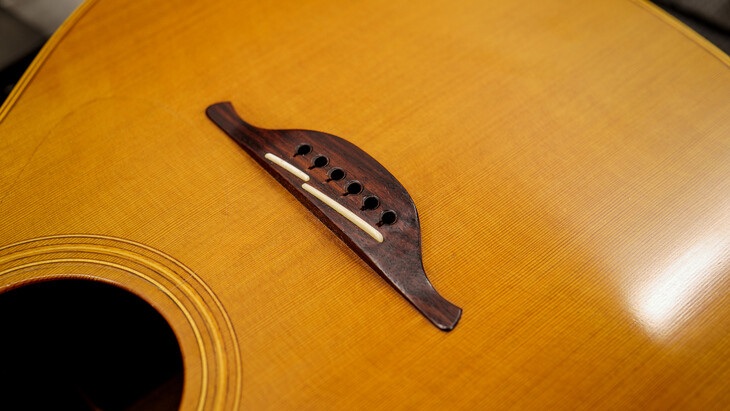
On most acoustic guitars, lowering the saddle is one of the most effective ways to reduce action. This involves removing the saddle and carefully sanding material from the bottom to reduce its height.
Because small changes make a big difference, patience is important. Removing too much material can create buzzing and reduce break angle over the bridge.
Many players prefer having this done professionally, especially on higher-end instruments.

How string gauge affects action
The type of guitar strings you use can also affect how your guitar feels.
Heavier strings create more tension, which can slightly increase action and neck relief. Lighter gauges often feel easier to play and require less finger pressure.
Most 6-string acoustic guitar players use steel strings, which offer bright tone and strong projection. If playability is your main concern, experimenting with lighter gauge steel strings can make a noticeable difference.12-string acoustic guitar players might find that the additional tension on the neck or additional strings can make their guitar feel more challenging to play, but string gauge can be experimented with for these instruments too.
Nylon strings behave differently and are typically used on classical-style instruments rather than standard steel-string acoustics. They feel softer under the fingers and operate at lower tension overall.
Humidity and acoustic guitar setup
Humidity plays a major role in acoustic guitar setup.
Dry conditions can cause the top of the guitar to flatten or sink, while excess moisture can raise the top and increase action. This is especially important with acoustic guitars because the body construction directly affects playability.
Keeping your guitar stored properly and using a humidifier when needed helps maintain consistent action and setup stability.
Should you lower the action yourself?
Minor adjustments can often be done safely at home if you work carefully and understand the process.
However, if your guitar is expensive, vintage or already showing issues like fret buzz or uneven playability, a professional setup is usually the best option.
A proper acoustic guitar setup does more than lower action. It improves tuning stability, intonation and overall feel across the fretboard.
Can lowering the action affect tone?
Yes, slightly.
Lower action often makes a guitar feel faster and easier to play, but extremely low action can reduce volume and sustain if the strings do not vibrate freely.
The goal is balance. A good setup should improve comfort while preserving the natural tone and resonance of the instrument.

Learning how to lower the action on an acoustic guitar can make a huge difference to comfort and playability. Small adjustments to neck relief, saddle height and string gauge can completely change how the guitar feels in your hands.
Whether you play a steel-string acoustic guitar or an instrument fitted with nylon strings, the best setup is one that feels natural and encourages you to keep playing.
If you are unsure where to start, take a gradual approach or speak to a professional technician. A well-set-up acoustic guitar is always more enjoyable to play.