










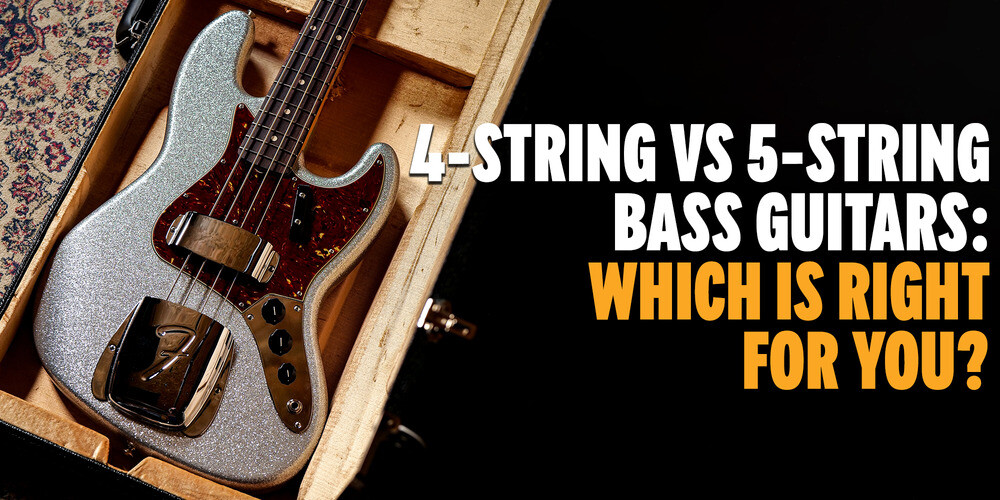
4-String vs 5-String Bass Guitars: Which Is Right for You?
Choosing your first bass guitar or upgrading your current instrument often leads to one question: should you choose a 4-string or a 5-string bass?
Both have their strengths, and neither is objectively better than the other. The right choice depends on the music you play, your experience level and what feels most comfortable in your hands.
This guide explains the key differences between 4-string and 5-string bass guitars, helping you decide which instrument best suits your playing style.
What is the difference between a 4-string and 5-string bass?
The biggest difference is exactly what the names suggest.
A standard 4-string bass is typically tuned E, A, D and G.
A 5-string bass adds a lower B string beneath the E, giving you access to five additional lower notes without changing position on the neck.
While this extra string expands your range, it also changes the feel, weight and playing experience of the instrument.

Why choose a 4-string bass guitar?
For many players, a 4-string bass guitar remains the most versatile and straightforward option.
The neck is usually narrower, making it easier to navigate, particularly for beginners or players with smaller hands. There is also less to think about when learning scales, chords and note positions.
Most rock, blues, indie, punk and classic pop music can be played comfortably on a four-string bass, making it the standard choice for generations of bassists.
If you are buying your first bass guitar, a 4-string model is often the most accessible place to start.

The benefits of a 5-string bass guitar
A 5-string bass guitar extends your lower range with an additional low B string.
This opens up more possibilities without needing to retune your instrument. It is particularly useful for modern rock, metal, gospel, jazz and contemporary pop, where lower notes are often part of the arrangement.
The extra string also allows you to play certain bass lines in different positions, reducing the need to move as far up and down the neck.
Many experienced players appreciate this added flexibility, particularly during live performances.
Which is easier to play?
For most beginners, a 4-string bass is slightly easier to learn.
The narrower neck feels more comfortable, and there are fewer strings to mute while playing. Developing clean technique is often simpler when starting with four strings.
A 5-string bass requires slightly more attention to muting because the unused low B string can create unwanted noise if it is not controlled properly.
That said, many players start on a five-string successfully. If you know you will regularly use the extended range, there is no reason you cannot begin there.
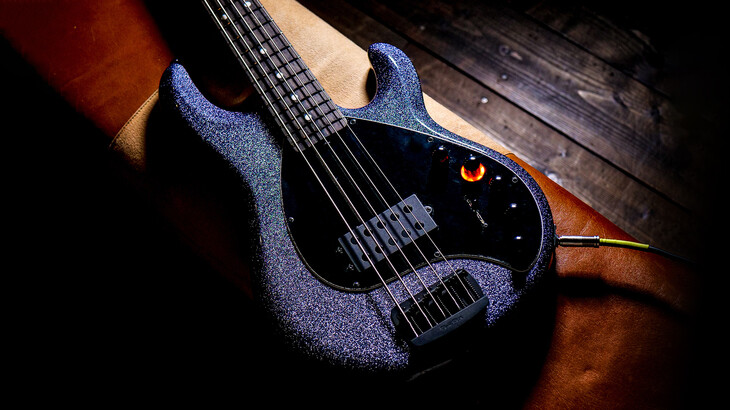
Does the extra string make a big difference?
It depends on the music you play.
If you mainly perform classic rock, blues or indie music, you may rarely need anything below low E.
If you play heavier genres or modern worship music, the low B string can quickly become an essential part of your playing.
The extra range is useful, but it is not necessary for everyone.
Comfort and neck size
One practical consideration is neck width.
A 5-string bass naturally requires a wider neck to accommodate the additional string. Some players adapt immediately, while others prefer the slimmer feel of a four-string instrument.
The best approach is to try both if possible. Comfort plays a significant role in long-term enjoyment and confidence.

Tone and sound
Many people assume a five-string bass sounds different simply because it has another string.
In reality, the core character of the instrument comes from the pickups, electronics, construction and the player.
The additional low B simply extends your available range. A quality four-string and five-string bass from the same manufacturer will often sound remarkably similar across the notes they share.
Popular bass brands to consider
Several manufacturers produce outstanding bass guitars in both four-string and five-string configurations.
Brands such as Fender, Gibson, Ibanez, Yamaha, Music Man and Mayones offer instruments across a wide range of budgets and playing styles.
Whether you are looking for a traditional passive bass or a modern active design, there are excellent options available for beginners and experienced players alike.
What about left-handed players?
If you are left-handed, there is no need to compromise.
Many manufacturers produce left-handed bass guitar models in both four-string and five-string versions, allowing you to choose the instrument that best suits your playing style without sacrificing comfort.
Should beginners choose a 4-string or 5-string bass?
For most new players, a 4-string bass guitar is the easiest recommendation.
It is simpler to learn, lighter to handle and covers the vast majority of musical styles.
However, if your musical interests centre around genres that regularly use the low B string, starting on a five-string can make sense from the beginning.
The most important factor is choosing an instrument that feels comfortable and encourages regular practice.
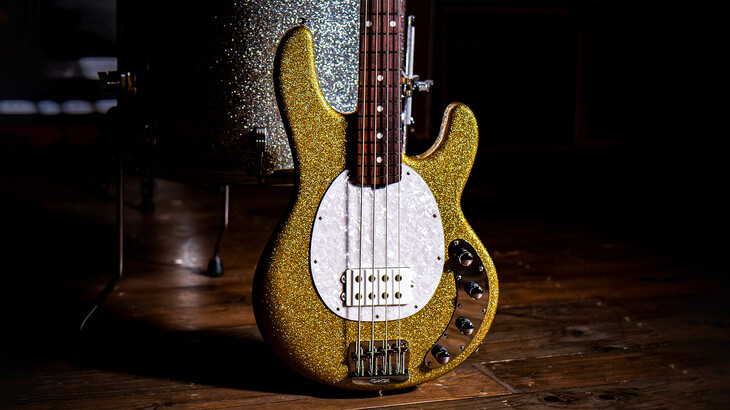
The debate between 4-string and 5-string bass guitars has no universal winner.
A 4-string bass offers simplicity, familiarity and everything most players will ever need. A 5-string bass provides additional range and flexibility for musicians who regularly explore lower registers.
Whichever you choose, focus on comfort, build quality and the type of music you enjoy playing. The right bass guitar is the one that inspires you to keep picking it up.
Related Articles