









Best Gibson Guitars for Beginners
Buying your first Gibson is an exciting step, but choosing the right model can be challenging. Gibson produces some of the world’s most recognisable electric and acoustic guitars, with several body shapes, pickup configurations and neck profiles to consider.
It is also important to be realistic about price. Most Gibson instruments sit above the typical beginner guitar market, making them more suitable for committed new players who want to invest in an instrument they can continue using for many years.
For someone seeking an electric guitar for beginners, models such as the Les Paul Junior, SG Standard and Les Paul Studio can provide a relatively accessible route into the Gibson range. Acoustic players can also choose from several classic Gibson designs, although body size and playing comfort should be considered carefully.
This guide explores the most suitable Gibson guitars for new players and explains what to look for before making your decision.
Are Gibson guitars suitable for beginners?
Yes, Gibson guitars can be suitable for beginners, but they will not be the right choice for every new player.
Gibson instruments are made in the United States using premium materials and traditional construction techniques. This places them at a higher price point than many guitars marketed specifically to beginners.
However, a beginner does not have to start with the cheapest available instrument. A well-built guitar with a comfortable setup can make learning more enjoyable and remove some of the tuning, fretwork and playability problems sometimes associated with less expensive instruments.
A Gibson may be worth considering if you are confident that you want to continue playing, have the available budget and want an instrument that should remain useful as your skills develop.
What should a beginner look for in a Gibson?
The Gibson name alone should not determine your choice. A suitable first guitar needs to feel comfortable, provide the sounds you enjoy and fit the way you intend to practise.
Important considerations include weight, neck profile, body size and controls.
Some Gibson Les Paul models can feel relatively heavy, particularly during longer standing sessions. An SG is usually lighter, while a Les Paul Junior offers a stripped-back design with fewer controls.
Neck shapes can also vary. Some Gibson guitars have substantial rounded profiles, while others use slimmer shapes that may feel easier for smaller hands.
The best approach is to try several models where possible. Comfort is personal, and a guitar that suits one beginner may feel completely different to another.
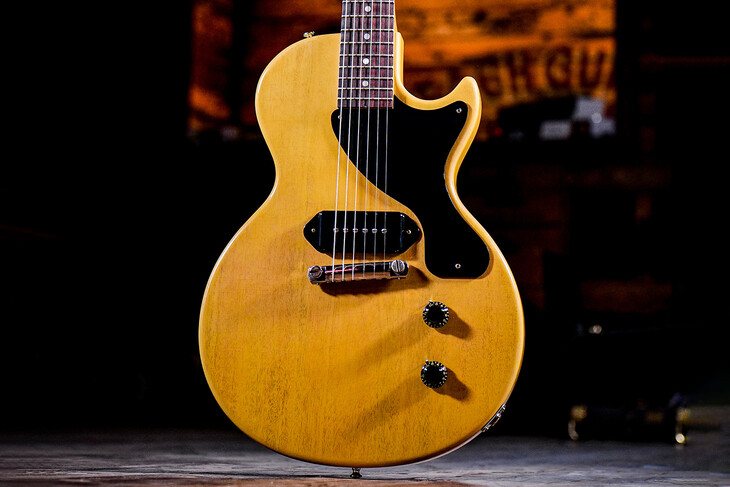
Gibson Les Paul Junior
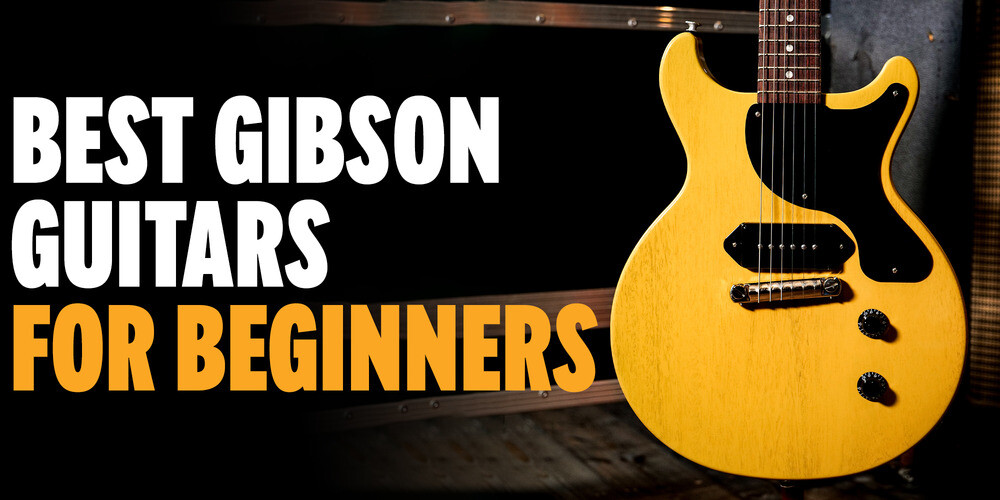
The Gibson Les Paul Junior is one of the strongest Gibson options for beginners.
Originally introduced as an accessible student model, the Junior removes many of the features found on more elaborate Les Paul guitars. It normally has a flat mahogany body, a single P-90 pickup and simple volume and tone controls.
This simplicity makes the guitar easy to understand. Instead of choosing between several pickups and controls, you can concentrate on your playing technique and use the volume and tone knobs to shape the sound.
The P-90 pickup produces a clear, lively tone with more body than many traditional single-coils. It can deliver clean sounds at lower volumes and becomes raw and powerful when used with overdrive.
A Les Paul Junior may suit beginners who enjoy rock, punk, alternative music, blues or straightforward guitar tones. Its stripped-back design also makes it attractive to experienced players who prefer simplicity over versatility.
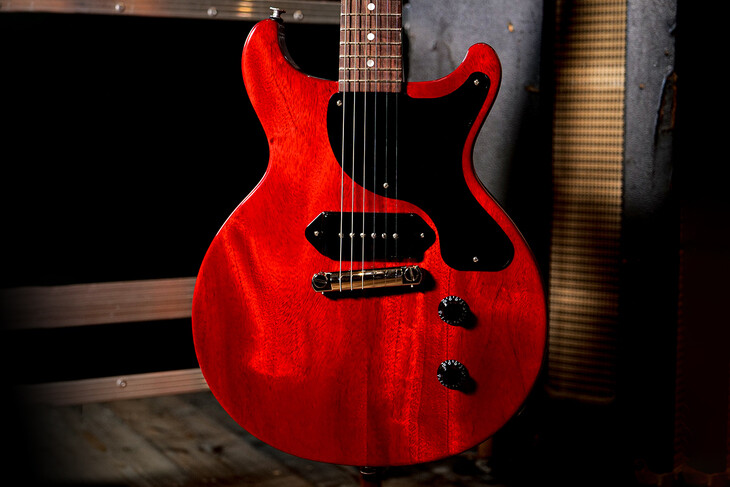
Gibson Les Paul Junior Double Cut
The Les Paul Junior Double Cut uses the same straightforward formula but adds a second cutaway.
Like the single-cut version, it generally uses one P-90 pickup with basic volume and tone controls.
For a new guitarist who wants a simple Gibson, the Double Cut can be an appealing alternative.
It still offers the direct character of the traditional Junior, but the body shape can feel less restrictive when exploring the full fretboard.
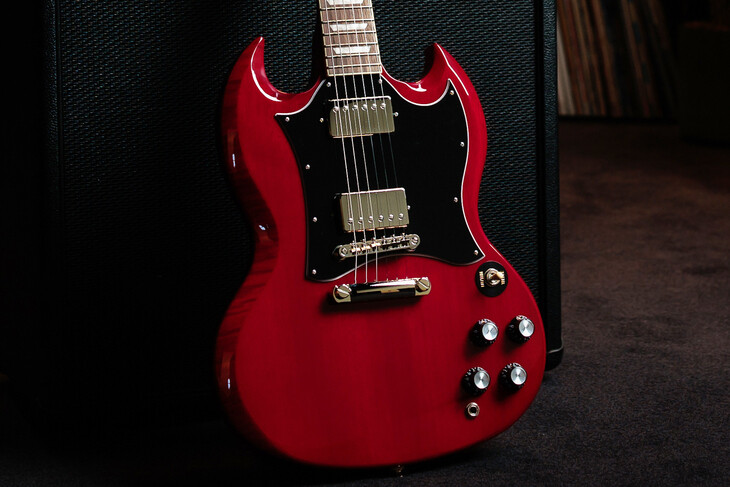
Gibson SG Standard
The Gibson SG Standard is another strong option for a committed beginner.
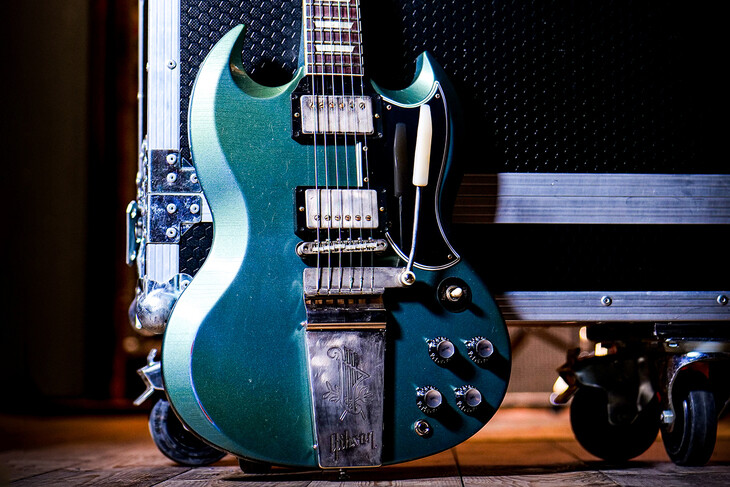
Its thin, double-cutaway mahogany body is generally lighter than a traditional Les Paul. The deep cutaways also provide excellent access to the higher frets, making the SG comfortable for rhythm and lead playing.
Most SG Standards use two humbucking pickups. These produce a fuller sound than single-coils while reducing the background hum that can become noticeable when using distortion.
The bridge pickup works well for rock riffs, lead guitar and heavier sounds. The neck pickup provides a warmer tone for blues, clean playing and smoother solos.
The SG does have more controls than the Les Paul Junior, typically offering separate volume and tone controls for each pickup. These are not difficult to learn, but a complete beginner may need time to understand how the controls interact.
An SG may be right for you if you want a relatively lightweight Gibson with powerful tones, comfortable upper-fret access and enough versatility to cover several genres.
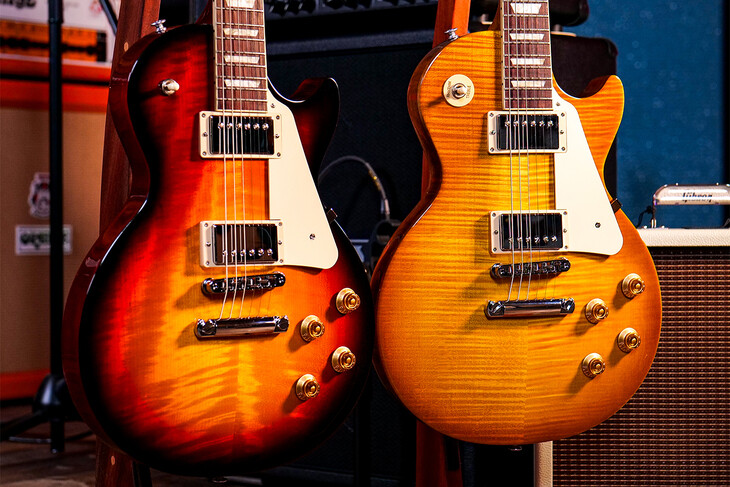
Gibson Les Paul Studio
The Gibson Les Paul Studio provides many of the features associated with a traditional Les Paul while removing some of its decorative details.
It retains the familiar single-cutaway body, set neck and twin-humbucker layout. However, the simpler finish and reduced ornamentation help distinguish it from more elaborate Les Paul Standard and Custom models.
For beginners, its greatest advantage is versatility. The two pickups and individual controls allow you to move between warm clean sounds, powerful rhythm tones and sustained lead guitar.
The Les Paul Studio can still feel relatively substantial compared with an SG or Junior. Players who practise standing should consider the instrument’s weight and use a supportive strap.
It is a good option for someone who wants the classic Les Paul experience without immediately moving into the higher-priced Standard or Custom ranges.
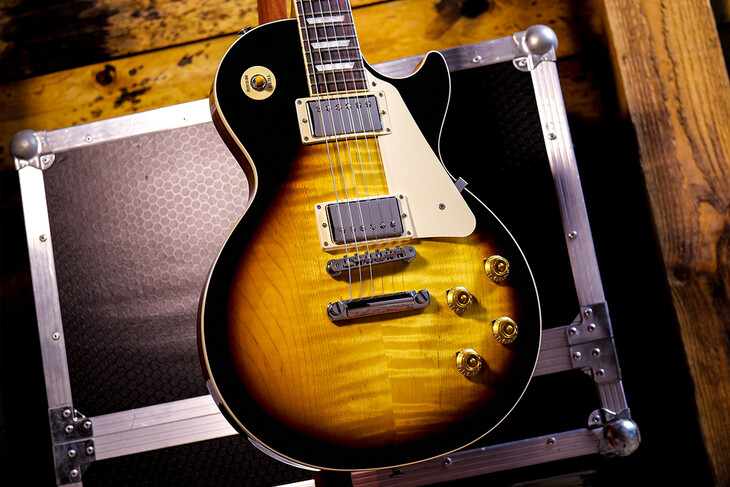
Gibson Les Paul Standard
A Gibson Les Paul Standard can certainly be used by a beginner, although it represents a considerable first-guitar investment.
The Les Paul Standard is known for its carved maple top, mahogany construction, twin humbuckers and extensive volume and tone controls. Depending on the model, players can choose between different neck profiles and historically influenced specifications.
It offers rich, powerful tones and excellent sustain, making it well suited to blues, classic rock, hard rock and a variety of modern styles.
However, its weight, price and control layout may be more than some new players need. It is most appropriate for a beginner who already knows they want a traditional Les Paul and is comfortable making a long-term investment.
What about Gibson Custom guitars?
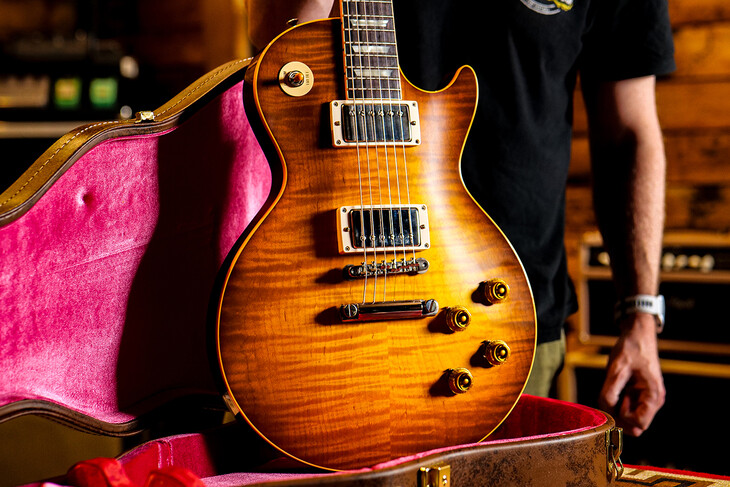
Gibson Custom instruments sit at the premium end of the range.
These guitars often recreate significant vintage models with historically informed construction, finishes, neck profiles and electronics. Murphy Lab instruments also receive specialised ageing treatments designed to reproduce the appearance and feel of an older guitar.
There is nothing preventing a beginner from buying one, but Gibson Custom guitars are generally aimed at experienced players, collectors and musicians looking for very particular specifications.
A new player may not yet know which neck profile, fret size, pickup type or vintage specification they prefer. Starting with a Gibson USA model can provide time to develop those preferences before considering a Custom Shop instrument.
Understanding Gibson USA guitars
Most familiar Gibson production models, including the Les Paul Junior, SG Standard, Les Paul Studio and Les Paul Standard, are part of the Gibson USA range.
Gibson USA guitars are built in Nashville and cover a broad selection of classic and modern designs. They sit below Gibson Custom instruments in the overall range but are still professional-quality guitars used for recording, rehearsal and live performance.
For beginners, Gibson USA guitars usually offer the most practical balance between recognisable Gibson construction and everyday usability.
The right model depends on whether you value the simplicity of a Junior, the lighter body of an SG or the familiar feel and versatility of a Les Paul.
Best Gibson acoustic guitars for beginners
Gibson also produces several highly regarded acoustic models, although these sit well above the cost of a typical beginner acoustic.
When comparing acoustic Gibson guitars, body size should be one of your first considerations. A large-bodied instrument can produce plenty of volume and low-end depth, but it may feel cumbersome for a smaller player.
Compact and slope-shouldered designs can offer a more comfortable starting point, while still providing the warm, full character associated with Gibson acoustics.
The following models may be worth considering for a committed beginner with a larger budget.
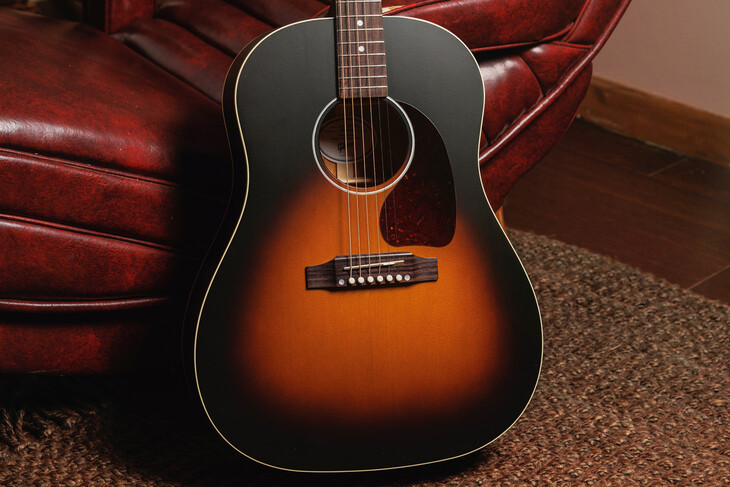
Gibson J-45
The J-45 is one of Gibson’s best-known acoustic designs.
Its slope-shouldered body produces a balanced sound suited to strumming, accompaniment and singer-songwriter styles. The response is often described as warm and controlled rather than excessively bright.
The J-45 is not a conventional beginner guitar because of its price, but it can be a long-term instrument for someone who is serious about acoustic playing.
Before choosing one, make sure the body shape and neck feel comfortable. Acoustic guitars generally use heavier strings than electric instruments, so a professional setup can also make the early learning experience easier.
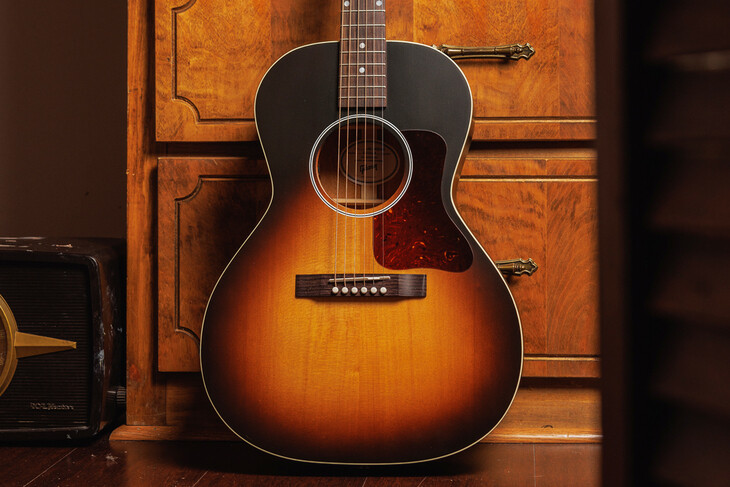
Gibson L-00
The Gibson L-00 has a smaller body than models such as the J-45 or Hummingbird.
Its compact proportions can feel more manageable when playing seated, making it an appealing option for smaller players and fingerstyle guitarists.
The L-00 typically has a focused and articulate voice that works well for blues, folk and detailed picking. Players who find large acoustic bodies uncomfortable may prefer its closer, more controlled playing position.
Gibson Hummingbird
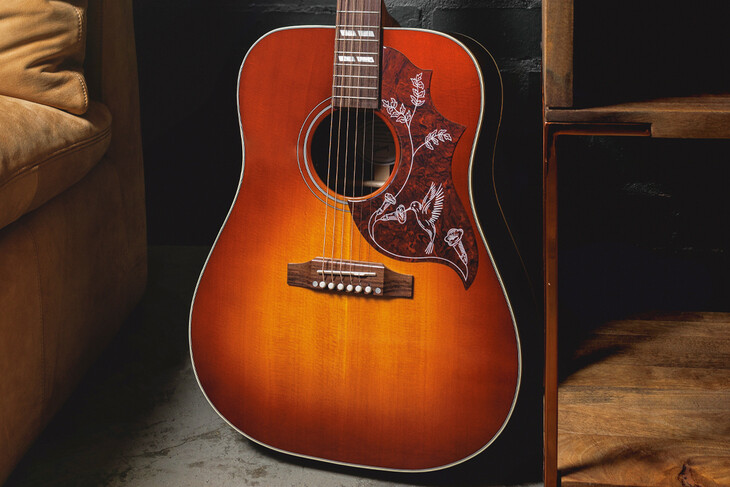
The Hummingbird is one of Gibson’s most distinctive acoustic guitars.
It combines a square-shouldered body with decorative appointments and a rich sound suited to strumming and vocal accompaniment. It has been used across folk, country, rock and pop music.
Its body is larger than an L-00, and its premium price makes it a significant first-guitar purchase. However, a committed beginner who is particularly inspired by the Hummingbird’s appearance and sound may find it an instrument they can keep for life.
Should beginners consider Epiphone instead?
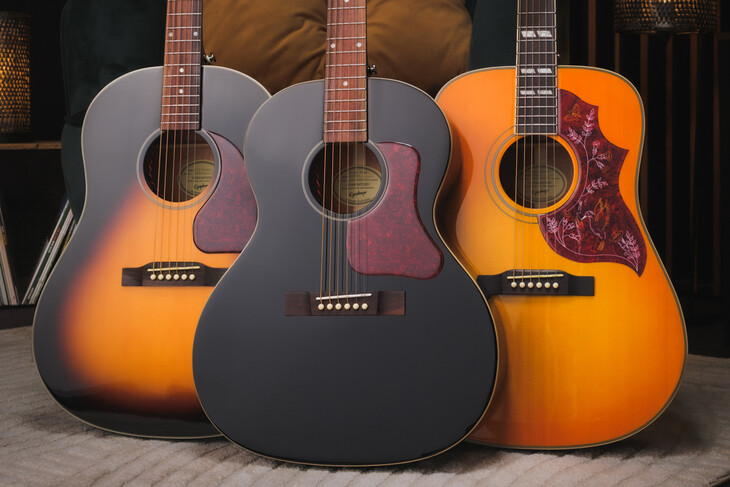
For many new players, an Epiphone may be the more practical starting point.
Epiphone produces accessible versions of classic Gibson designs, including Les Paul, SG, ES and acoustic models. These guitars allow beginners to explore familiar body shapes and pickup configurations at a lower initial cost.
An Epiphone Les Paul Junior, Les Paul Standard or SG can help you discover whether you enjoy the Gibson-style scale length, body shape and controls before investing in a Gibson USA instrument.
Choosing Epiphone does not mean settling for the wrong guitar. It can provide a sensible route into the wider Gibson family while leaving more of your budget available for an amplifier, case, strap and other essentials.
Do you need a Gibson as your first guitar?
No particular brand is essential for learning.
Your first guitar should be comfortable, reliable and inspiring. A Gibson can meet all three requirements, but so can many instruments at lower price points.
The advantage of starting with a Gibson is that you are unlikely to outgrow its build quality as your playing improves. The disadvantage is the greater initial cost and the risk of choosing premium specifications before you fully understand your preferences.
Think carefully about your commitment, budget and musical goals rather than buying solely because of the name on the headstock.
Which Gibson is best for a beginner?
The Les Paul Junior is often the clearest choice for beginners who value simplicity. Its single pickup and direct controls make it easy to understand, while its sound remains suitable for professional use.
The SG Standard is a strong choice for players who want a lighter body, excellent upper-fret access and the versatility of two humbuckers.
The Les Paul Studio suits beginners who want a traditional twin-pickup Les Paul with fewer decorative features than a Standard.
The L-00 can be a comfortable acoustic option for players who prefer a smaller body, while the J-45 is well suited to those seeking a classic all-round Gibson acoustic.
The best model is ultimately the one that feels comfortable and produces the sound that encourages you to practise.
The best Gibson guitars for beginners combine manageable playability with the distinctive sound and construction that make the brand so desirable.
A Les Paul Junior offers straightforward controls and a responsive P-90 sound. The SG Standard provides lighter weight and impressive access to the full fretboard. The Les Paul Studio delivers a more traditional Gibson experience with plenty of tonal flexibility.
Acoustic players can also explore models such as the L-00 and J-45, provided the body shape, string tension and price are suitable.
A Gibson is not necessary for learning, but it can be a rewarding long-term investment for a committed beginner. Try several instruments where possible, pay attention to comfort and choose the guitar that makes you want to keep playing. Book an appointment now and one of our dedicated sales team will contact you to discuss your needs and arrange the perfect time for you to get your hands on the guitar of your dreams.